
The Home Retrofit Journey
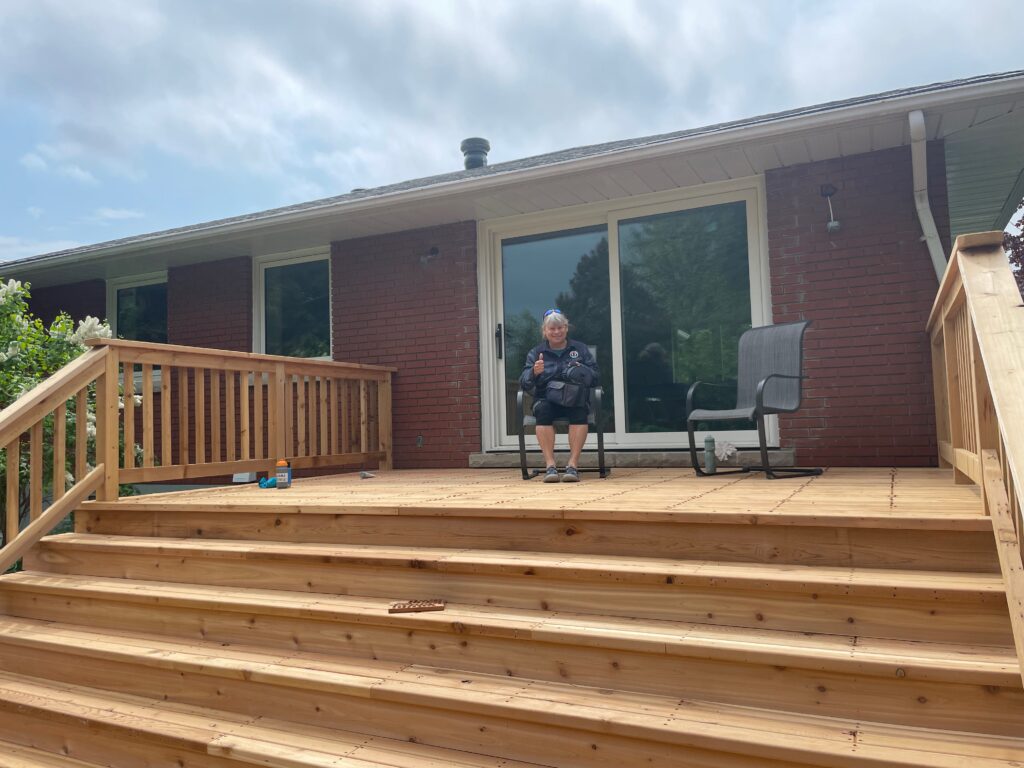
Leyshon and Doughty had their initial EnerGuide home evaluation completed in February 2021 by Mike Matthews, their energy advisor from Environment Network in Collingwood. On the experience, Doughty remarked that, “The process with Mike Matthews was excellent—he was fantastic to work with. He’s knowledgeable, easy to work with, and had great ideas for our retrofit.” The two homeowners sat on the comprehensive report and retrofit recommendations left by Matthews until the Canada Greener Homes Grants was announced by the federal government in Spring of 2021. A few months later, they started planning for their renovation project.
At the beginning of 2022, Leyshon and Doughty reached out to their friend Bruce Green, who—coincidentally, to his name—is a green builder, to help them turn their house into their dream home. Green works closely with a green architect named Jim Campbell, and so also recommended his services to the couple who were looking for as many ways to reduce their impact on the environment around them. In fact, the couple managed to reclaim much of the original cedar wood and some of the existing fibreglass and cellulose insulation to be reused in their renovation. As part of their previous planning, the homeowners decided that, additionally, any new material they sourced for their home renovation would also need to embody as little carbon as reasonable.
The Retrofits
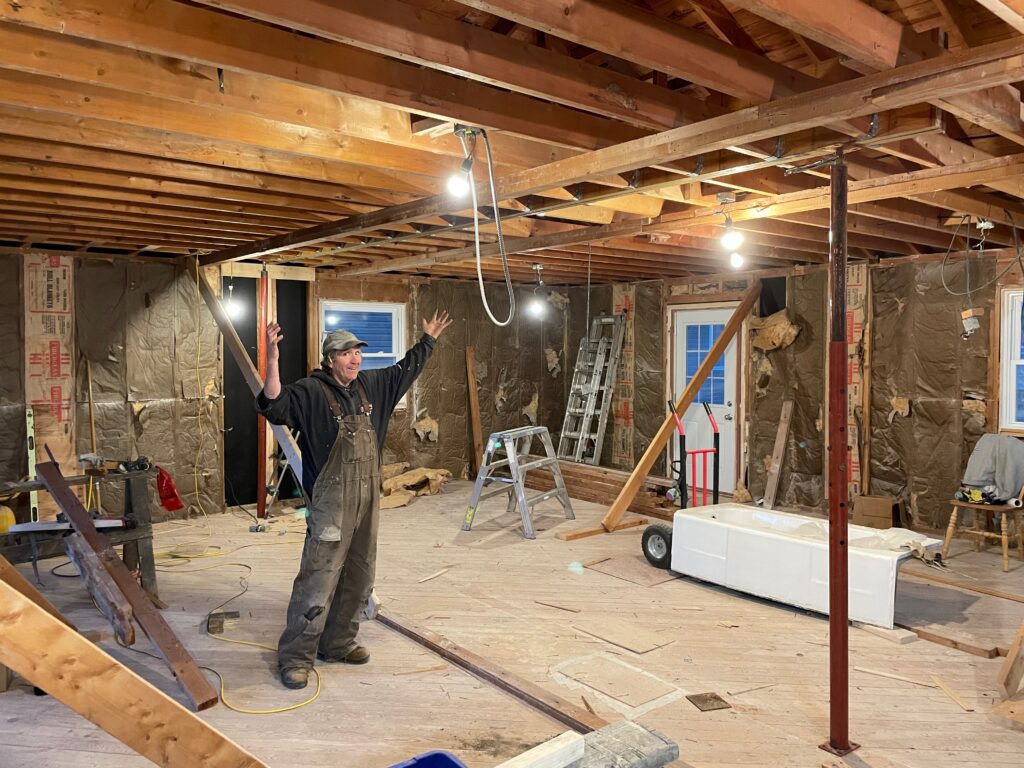
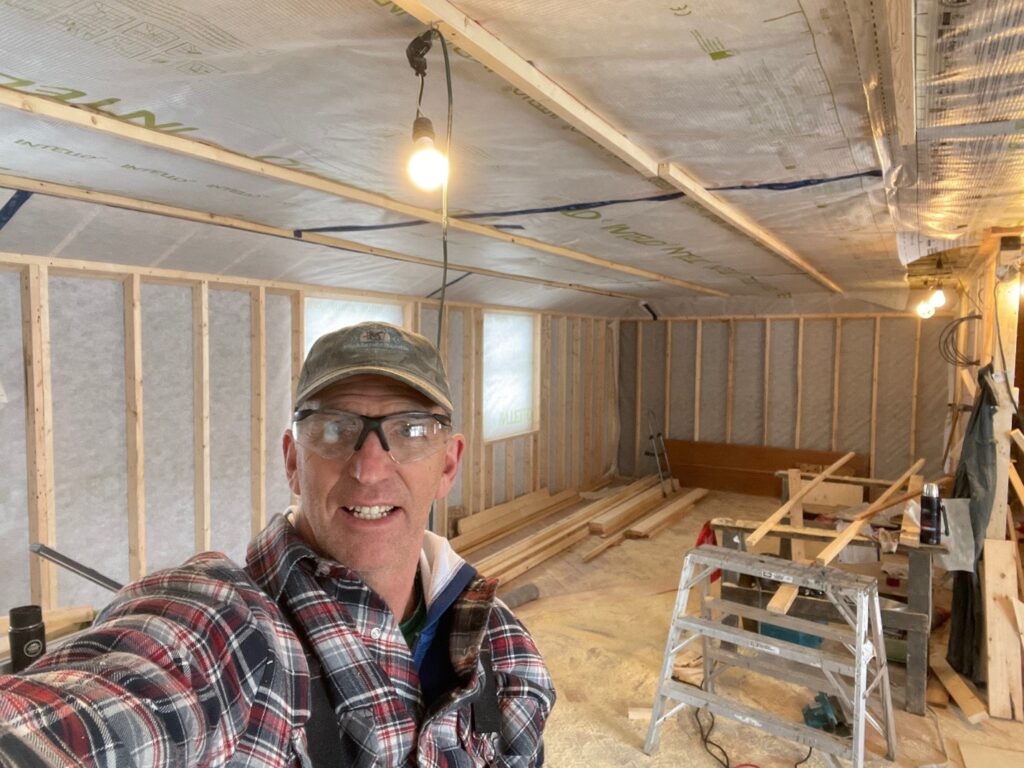
In mid-February 2022, the couple had 16 windows and two doors replaced with 14 windows, a patio door, and a new front door—all ENERGY STAR or more efficient models. 14 of the old windows were the sliding type, which are notoriously leaky. After that, draft-proofing was done and cellulose insulation was dense-packed into the stud-walls—which had gone from only four-inches thick to about 14-inch-thick walls, including the new service cavities. In the ceiling, below the attic, mineral wool batts were lined into the stud cavities. In the basement, a layer of continuous insulation was installed before constructing a new stud wall with more dense-packed cellulose. These insulation upgrades knocked down their bungalow’s energy consumption considerably.
Afterwards, the couple had Matthews return to test the air-leakage before the drywall install and found a fault in the patio door seal, which was easily fixed. Another significant source of leakage had been around the diagonal tongue-and-groove subfloor, which Green and Doughty diligently sealed to plug up the air leaks. Campbell remarked, “Mike’s input for this project was really great. That blower-door test is so awesome, really. Whether you’re doing a high-performance house or not, it’s just a good idea to do one. It should be standardized, and all houses for sale should get an energy label.
Later that Spring, the homeowners had their cold-climate heat pump installed for 2-in-1 space heating and cooling. The couple also swapped their existing electric water heater for a 420% efficient heat pump model and ended their gas connection. If you thought they only had two heat pumps (aside from food refrigeration), you’d be wrong—Doughty and Leyshon also have a ventless heat pump dryer!
The Retrofit’s Benefits
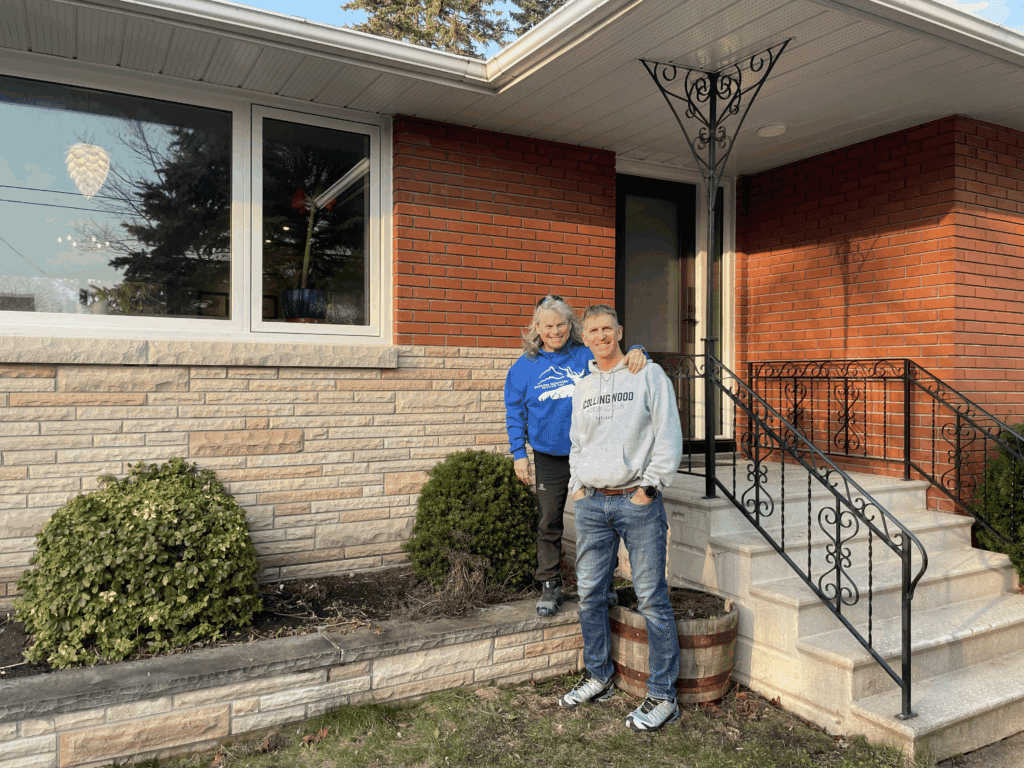
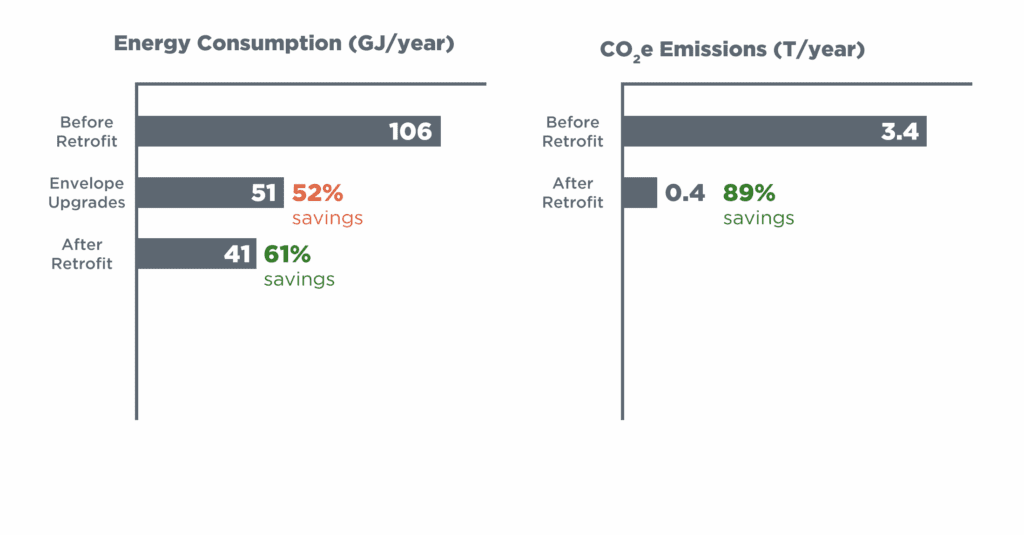
To Doughty and Leyshon, their deep home retrofit provides peace of mind: their bungalow is now highly insulated from extreme heat and cold, they’ve cut their home’s GHG emissions by 89%, and now pay considerably less on their energy bills. Leyshon adds, “In the end, you’re going to save money because you’re not using gas and you’re not wasting heat out of the poor envelope.”
Financial Incentives and Climate Goals
Angus Doughty and Sian Leyshon were able to access the entire $5,000 from Natural Resources Canada’s recently ended Canada Greener Homes Grant, as well as the $600 rebate to cover the energy auditing services. The retired couple have also applied for the Canada Revenue Agency’s GST/HST New Housing Rebate as their retrofit project is likely eligible under the inclusion for substantial renovations of 90% or more.
As recent retirees, they noted that their investment in their forever home is meant more to benefit the next owners of this house, and the reduction in emissions is their contribution to reaching national and international climate goals of halting worsening global warming.
Retrofit Summary
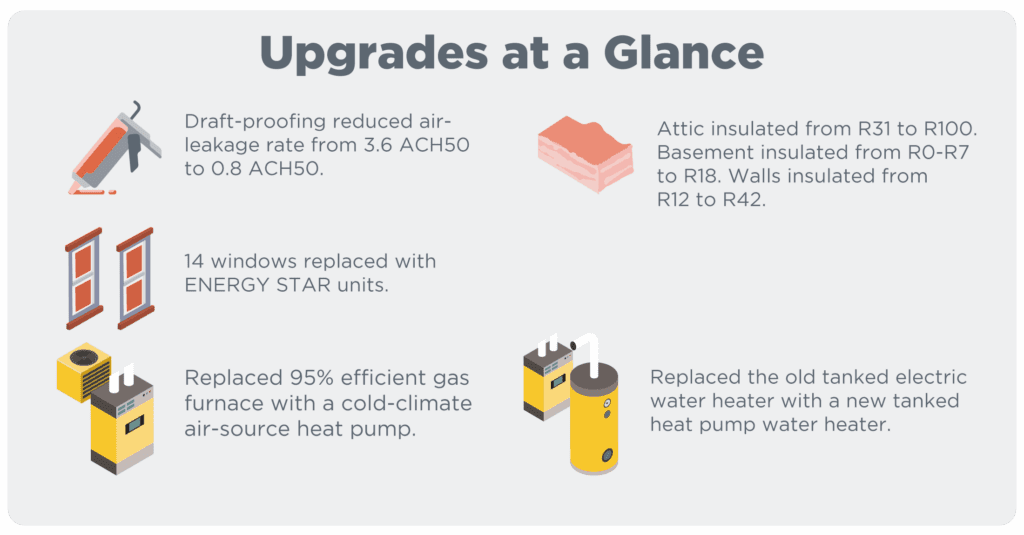
| Retrofit at a Glance | |
| Starting Point | Retrofit Results |
| 3.6 ACH50 | 0.8 ACH50 |
| Attic insulation R31 | Attic insulation R100 |
| Wall insulation R12 | Wall insulation R42 |
| Basement insulation R0-R7 | Basement insulation R18 |
| 14 windows replaced with ENERGY STAR units | |
| Heating needs reduced by 64% | |
| 95% efficient gas furnace | Cold-climate heat pump |
| Electric water heater tank | 420% efficient heat pump water heater tank |
| 106 GJ EnerGuide Rating | 41 GJ EnerGuide Rating |
| Ontario Building Code Reference House: 64 GJ |
Key words: deep energy retrofits, home energy retrofit, EnerGuide, heat pump.