This guide is part of our series, “How to Retrofit Your Home,” a step-by-step pathway to making your home more efficient and comfortable.
Why should you insulate your home?
After you first air seal your home.
Insulation is a key component of every Canadian home.
It acts as a thermal barrier to keep heat inside our homes in the winter and outside in the summer.
Even though the outside environment can vary dramatically, an energy-efficient Canadian home can be comfortable year-round.
Insulating should be one of your first steps.
Heating is the largest consumer of energy in your home. In order to reduce your heating bill, the first step is to improve your building envelope to reduce air leakage and reduce heat loss.
By choosing to do this first in any retrofit, you reduce the overall heating requirements of your home and can downsize your heating equipment, saving upfront costs and long-term operating costs.
Ultimately, the more well-insulated and leak-free your building envelope is, the less energy you need to use to keep your home comfortable! By implementing whole-home building envelope improvement strategies, you can invest in a future-proof home today and reap the benefits of a healthier, comfortable, and quieter home.
Making insulation the first stage of your retrofit journey can help you reduce your monthly energy bills, make your indoor environment healthy and comfortable, and reduce the carbon impact your home has on the global environment.
“Our house is a lot warmer in the winter and there are fewer cold spots, especially near the outside walls…The upstairs is much more comfortable than it was before.” Steve McMurtry – Homeowner in Peterborough
Types of Building Insulation
With so many different home insulation products on the market, it can sometimes be a difficult choice to make — and one that affects you, your home, and the environment. Luckily, your Registered Energy Advisor can provide you with advice and information on the different types and materials. We’ve listed some of the common types below:
Batt insulation
- This common type looks like a memory-foam mattress topper, but fluffier and more fibrous.
Loose-fill insulation
- This type is great for hard-to-reach places as it can be blown in through relatively small gaps.
Spray-foam insulation
- Formaldehyde-based foamed-in-place urea insulation has been banned in Canada since 1980.
- This type of insulation is typically considered an environmentally unfriendly choice.
Rigid-board insulation
- A bit on the pricier side, but this one is more compact and typically used on the exterior or in tight spaces.
Common insulation materials include:
Cellulose fibre
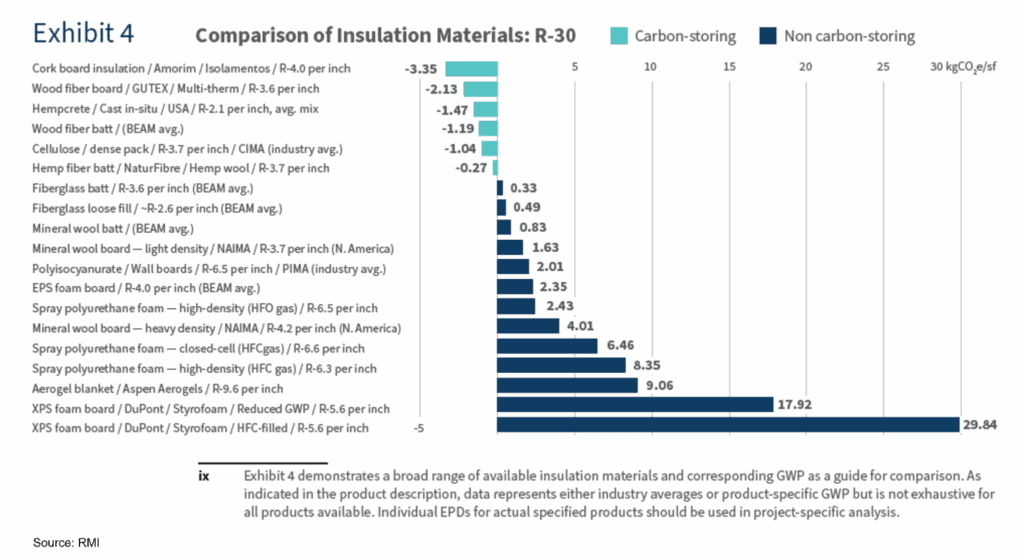
- Removes carbon from the atmosphere when grown and locks that carbon into your walls.
- Similar materials — like cork, hemp, or straw — are largely climate positive.
Mineral wool
- Produced using molten rock or slag by-produced in steel mills (e.g., Rockwool).
- Should be carefully handled as fibres can irritate airways, eyes, and skin.
Fibreglass
- Made by spinning molten glass into super fine fibres.
- A varying percentage of the raw glass used is recycled glass.
- Like mineral wool, fibreglass should be carefully handled as it can cause irritation to the airways, eyes, and skin.
Polystyrene
- A petroleum-based product used in rigid-board insulation.
- Comes in expanded (EPS), graphite (GPS), and extruded (XPS) versions.
Polyurethane
- A sprayed foam product made from petroleum.
- Typically used to insulate older basements.
Polyisocyanurate
- Sometimes comes with aluminum-foil surfacing to further improve thermal performance.
- Ironically, this rigid-board material does not perform as well in colder climates.
Some other less common insulation materials are animal wool (typically sheep), recycled cotton and denim fibre, Icynene, and aerogel, among many others.
Choosing the type and material of insulation for your home is best done in consultation with a Registered Energy Advisor. Installation of any insulation should be done by a qualified professional, as improper installation can lead to poor performance and increased costs.
Things to consider when selecting home insulation products
A lot of factors will influence the insulation products you choose for your home, including your budget, the available space you have, the structure of your building, the existing insulation (if any), and the climate you live in.
But, there are some other factors you should consider, too:
- The R-value of the insulation will tell you how effective it is when installed properly.
- The materials used in the production of the insulation will inform you if the product could have negative impacts on your health or indoor air quality.
- The embodied or material carbon rating will tell you whether the production of that product had a negative, neutral, or positive impact on our climate. This last consideration is one that’s gaining attention. This is because, particularly for insulation, production-related carbon emissions (embodied emissions) can sometimes outweigh the climate benefits of using the material to reduce heat loss over time (operational emissions). But, embodied and operational emissions don’t have to be at odds! Organizations, including Builders for Climate Action, have developed tools (like the BEAM tool) to help you find the carbon footprint of your building materials and make climate-smart choices.
A Registered Energy Advisor can help you determine the best combination of energy solutions for your unique home and situation (budget, envelope construction, climate zone, etc.). Proper design of the thermal barrier and installation of insulation are the keys to a healthier, comfortable, and more affordable home.
To learn more about the building envelope and how to make your old home run like new, read NRCan’s publication Keeping the Heat In.
Explore the full How to Retrofit Your Home series.
Check out our Energy Retrofit Glossary.