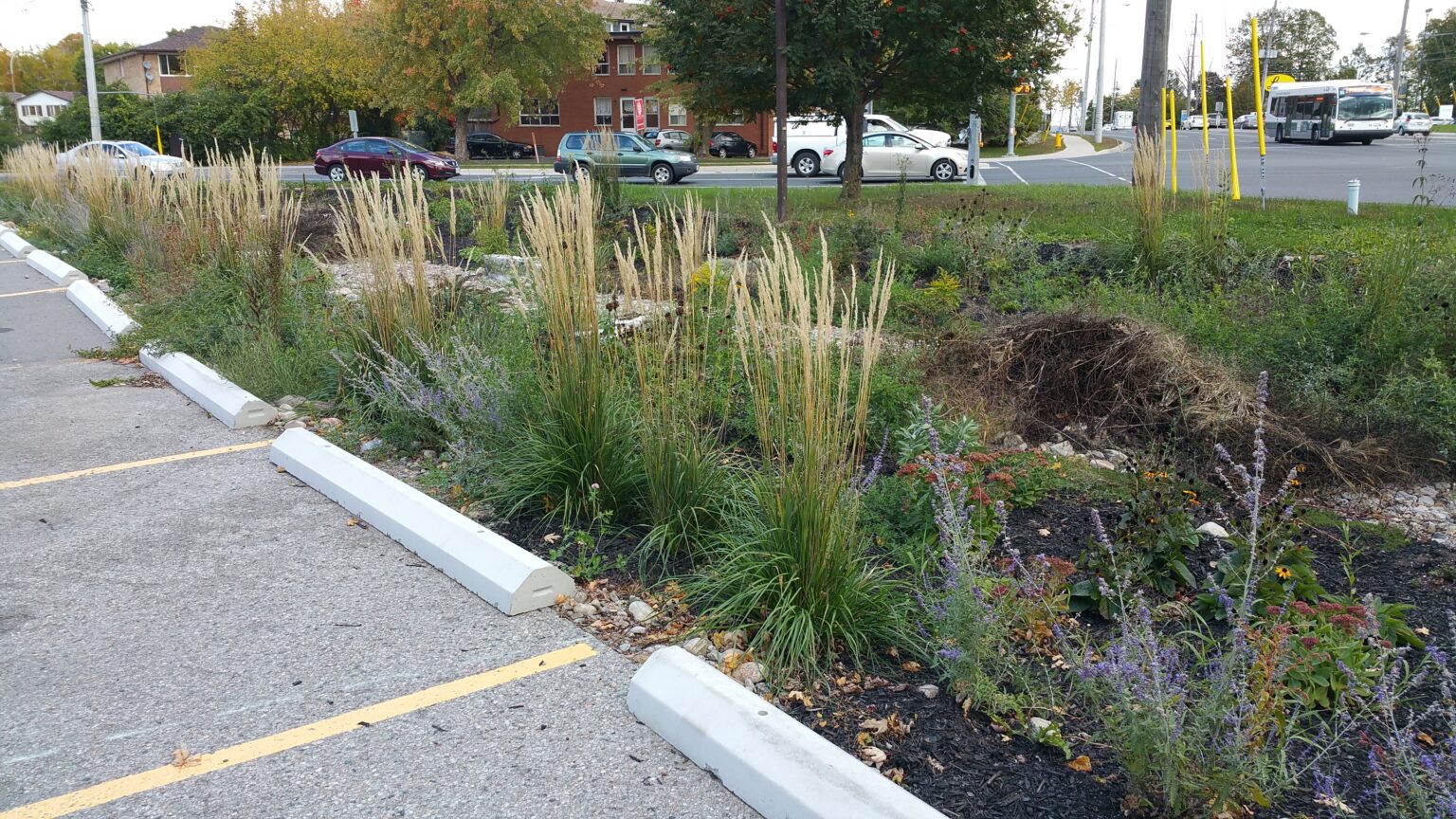
What is a Rain Garden?
A rain garden is a shallow, bowl-shaped garden (6 -12″ deep) that is designed to collect, absorb, and filter stormwater runoff. These gardens are usually located near buildings or paved surfaces where they collect rainwater from downspouts.
During the design process, specific plants are selected to support water infiltration and filter out pollutants. For example, some tall prairie grasses have roots that can grow up to 10 feet long, making them exceptional for absorbing rainwater into the soil!
See examples of Rain Gardens across Canada on our Action Map.
Benefits of Rain Gardens
Rain gardens provide significant environmental and community benefits, including:
- Reducing urban flooding by allowing rainwater runoff to slowly soak into the ground instead of flowing into storm drains
- Filtering out pollutants from runoff before it reaches rivers, lakes, and streams
- Providing habitat for birds and pollinators, such as butterflies and bees
- Functioning in diverse soil types, including clay, sand, and silt
- Filtering snowmelt during winter months, not just rainfall
Rain gardens are no longer an emerging trend – they’re a proven tool for managing stormwater. Across Canada, and in cities like Chicago, Seattle, Los Angeles, and Melbourne, rain gardens are increasingly being implemented.
Want to learn how to build one?
Take the next step with our RAIN Garden Master Class, a free online training to help you design, size, and plant a rain garden in your community.