


Our Home Energy Solutions

Heat Pump Right-sizing
Heat pumps can provide far more cost-effective heating and cooling than conventional HVAC systems, and our registered Energy Advisors are trained to help you understand how to ensure you choose a heat pump system that is right for your home and your climate.
Learn More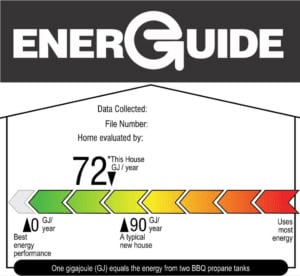
EnerGuide Home Energy Evaluation
An EnerGuide Home Energy Evaluation provides you with information to help you plan a comprehensive retrofit and maximize your energy savings and your comfort. An experienced Energy Advisor will listen to your plans and priorities. They will prepare a customized report for you and your home, outlining the appropriate upgrades, the most effective sequence for those upgrades, and the available incentives.
Learn MoreAn EnerGuide Home Energy Evaluation from our Green Communities network has many benefits:
- Comprehensive energy efficiency assessment that helps you make informed decisions.
- Federally-licenced Energy Advisors who are at your door to understand your home and your needs.
- Green Communities Canada is one of the first and longest-serving licensed EnerGuide Rating providers.
- Helps you make informed decisions about how best to spend your time and money on retrofits.
What are Green Communities Canada’s Home Energy Services?
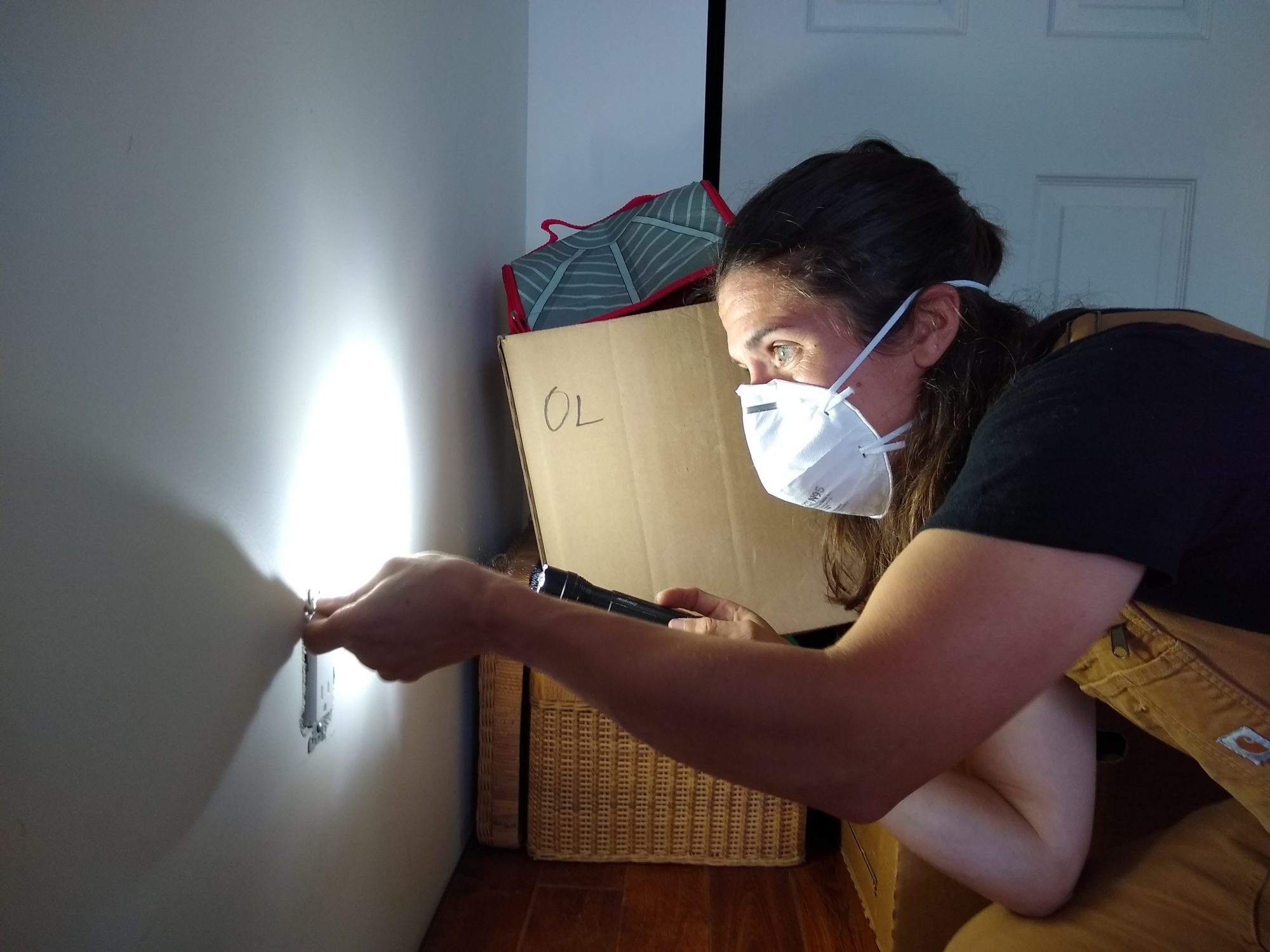
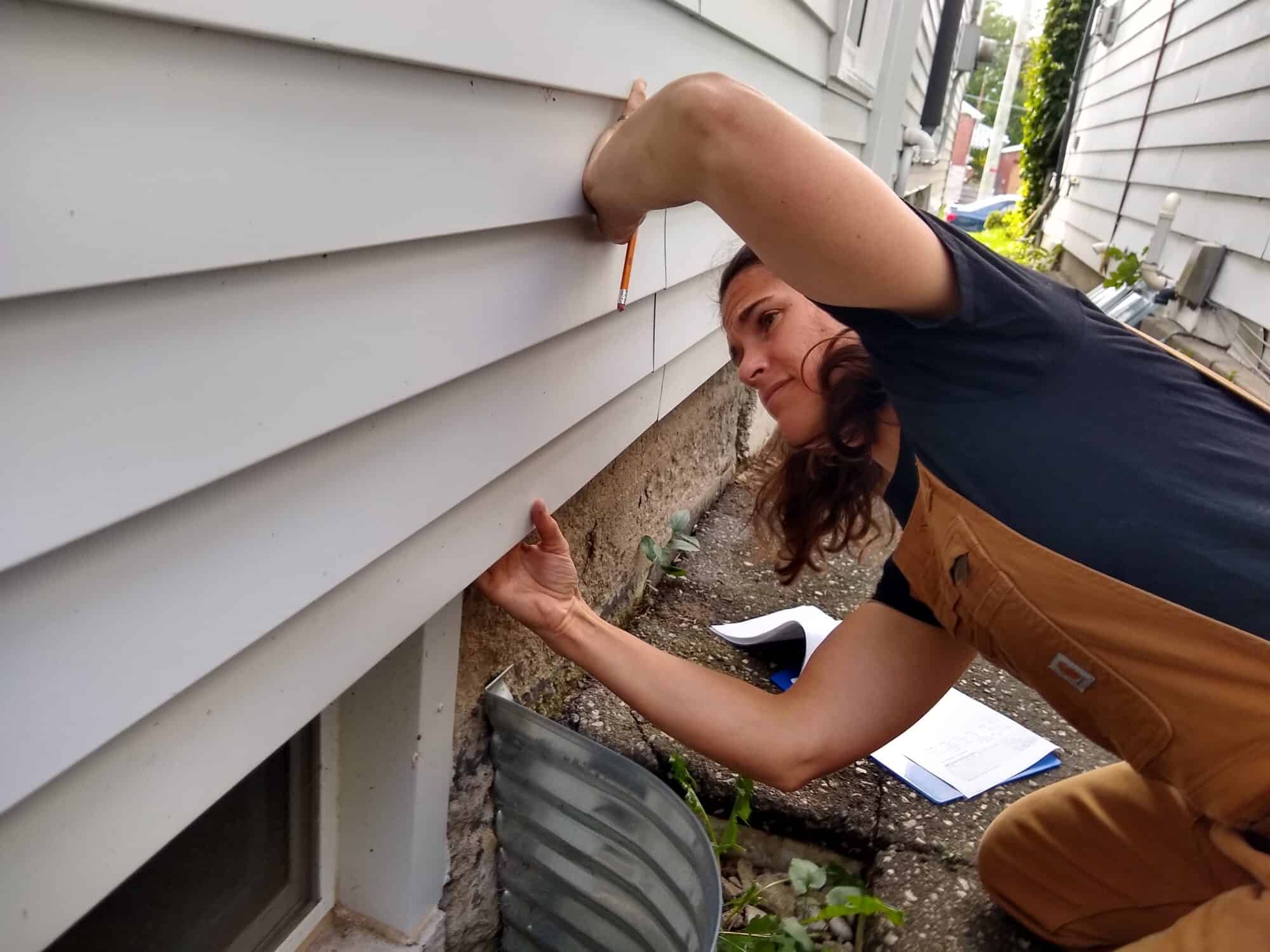
Our expert Energy Advisors will examine your house from basement to attic to assess its energy use and building envelope. This will help fix air leaks and drafts, poor insulation of windows and doors, and address heating/cooling problems. The inspection may also identify issues such as dampness, mould/mold or mildew in your home which could lead to health problems.
Green Communities Canada is licensed by Natural Resources Canada (NRCan) to use the EnerGuide Rating System, Canada’s advanced system to rate home energy consumption and provide recommendations customized for your home.
As Ontario’s first and longest-serving licensed EnerGuide Rating provider, we provide advice and don’t sell renovations. Our advisors will support you through any incentive programs, and process and submit your rebate application for you.
Our Members






REAL (Rideau Environmental Action League)
Lanark, Leeds-Grenville, and Frontenac
History of Home Energy Services
Green Communities Canada pioneered home energy evaluation, making these services mainstream across Canada. How? Because we put the integrity of our relationships with homeowners and our shared environment first.
We have helped thousands of homeowners find their best pathway to reducing energy bills, increasing comfort, and reducing emissions.

Home Energy Solutions History
Green Communities Canada has been a leader in home energy efficiency for decades.
GCC creates foundations for future greener home retrofit services.
Federal government taps Green Communities Canada to lead new rating service.
Green Communities Canada becomes first EnerGuide Service Organization.
Green Communities Canada develops and pilots first incentive program using EnerGuide.
In 2000, Green Communities Canada developed and piloted the first incentive program using EnerGuide ratings. This incentive program was later adopted by the federal government resulting in a massive increase in retrofits completed – from 4,000 pre-incentives to more than 600,000 nation-wide by 2012.
GCC delivers Enbridge’s low-income insulation program.

GCC delivers assessments delivering unprecedented success.

Deep Energy Retrofits Canada
Green Communities Canada expands its home energy portfolio to include the newly created Deep Energy Retrofits (DER) program. DER is developing a knowledge centre that provides homeowners across the country with information and tools they can use to accelerate deep energy retrofits.
Learn more about Deep Energy Retrofits program.
Heat Pump Right-Sizing Energy Concierge and Advocacy
Our Deep Energy Retrofits program initiated a Heat Pump Right-Sizing Concierge and Advocacy project. This project developed a curriculum to train energy advisors and pilot the training in four provinces with collaborators, including Natural Resources Canada, City Green Solutions, Thermalwise Building Energy Savings, prairieHOUSE Performance, Windfall Ecology Centre, Toronto Home Retrofits, Toronto Hydro, and the Heating, Refrigeration & Air Conditioning Institute of Canada.

GCC’s service providers continue to help homeowners
Green Communities Canada was the first federally-licensed EnerGuide Rating System Service Organization in Ontario, and one of the longest-serving Service Organizations in all of Canada. Together with our network across Canada, we help advocate for changes in policy and incentive programs that best serve homeowners in our collective effort to reduce emissions and costs while improving home value and comfort.

Retrofit Case Studies
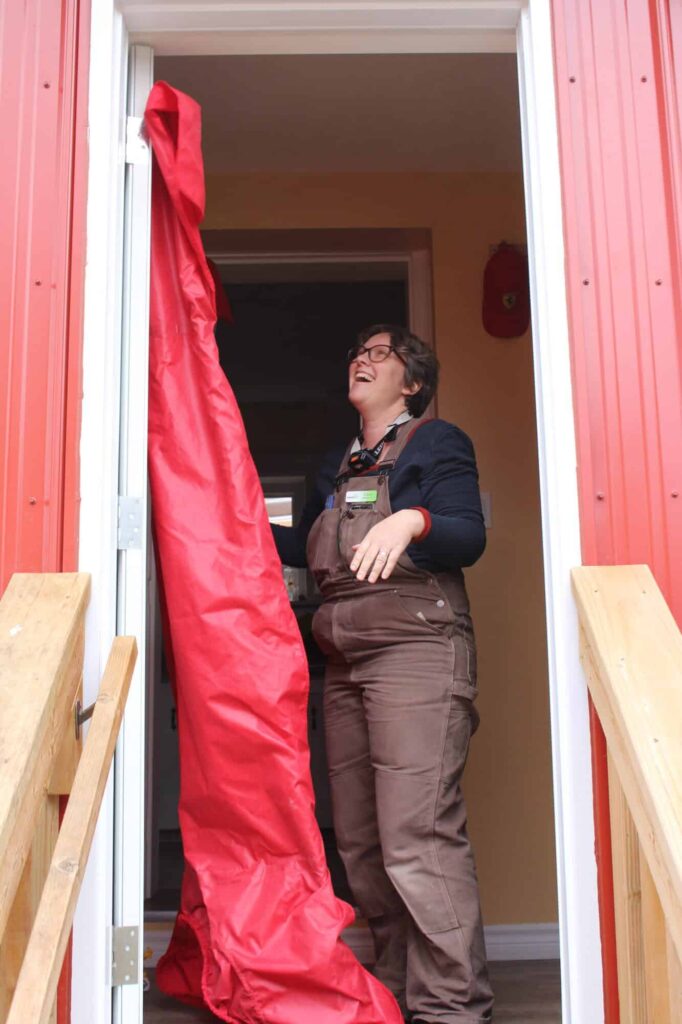
Don’t take our word for it! Hear all about deep energy retrofits from homeowners like you. Located in different climates across Canada, these homeowners have each achieved energy savings of over 50 per cent!
View Case Studies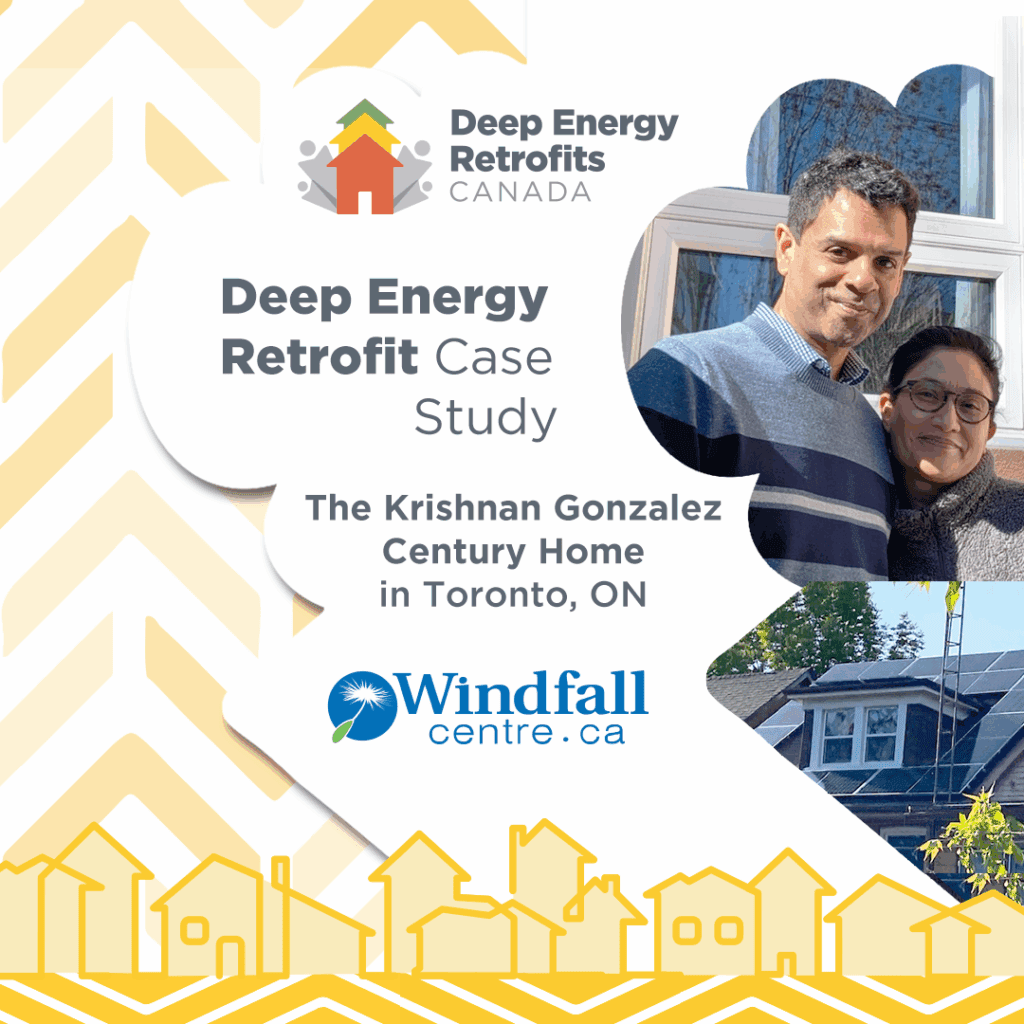
Toronto family deeply retrofits century home with $20k in rebates and saves $1.8k a year!
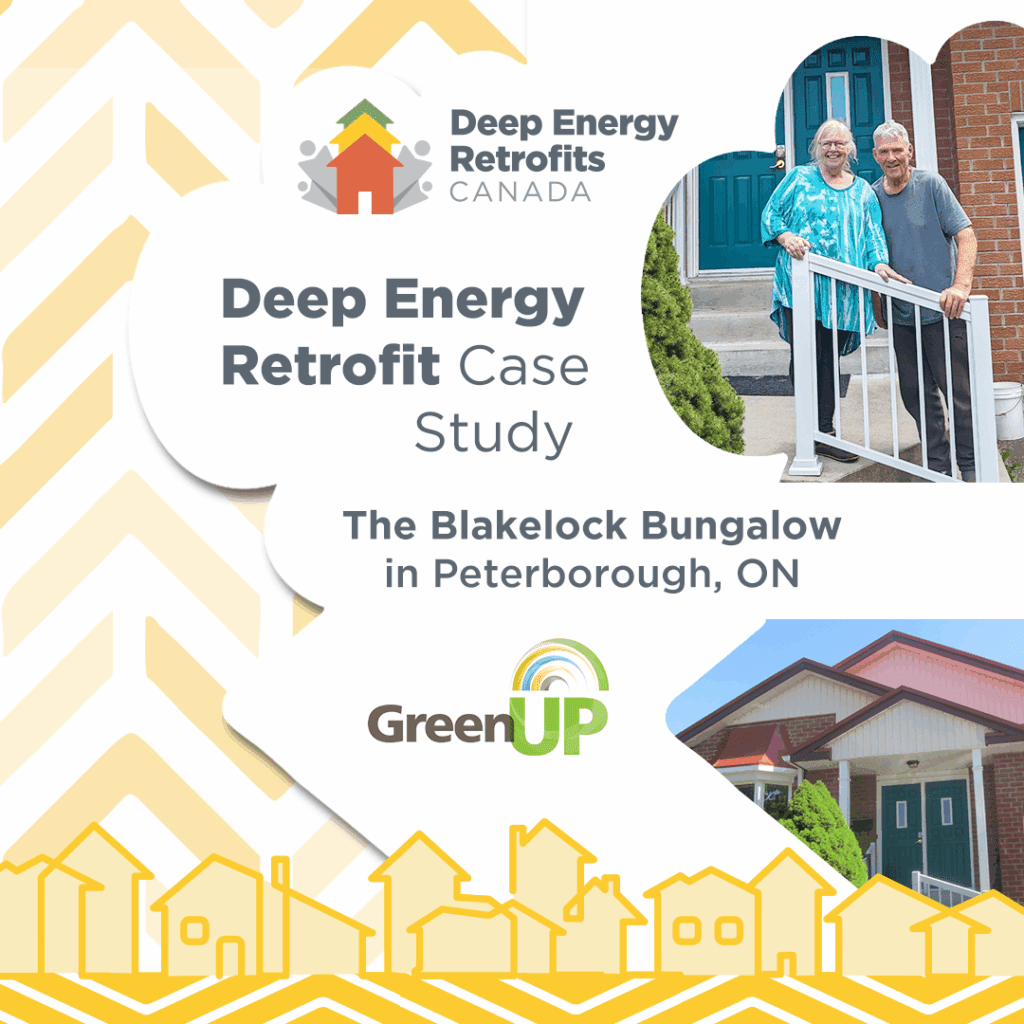
Retired Couple Improve Home Envelope and Add Heat Pumps to Get 56 Per Cent Energy Savings!

Kingston Home Adds Solar and Heat Pump to Get 84 Per Cent Energy Savings!
Home Energy Resources
What is a heat pump and is it appropriate for my home? What are the envelope and the mechanicals and wy should I improve the envelope before updating the mechanicals? Where can I find incentives, rebates, and loan programs appropriate to my region and home? All these questions and more can be answered by searching in our Home Energy Resources and our Frequently Asked Questions.
Got Questions?
Here are some common questions our Home Energy Solutions team gets and, more importantly, the answers and additional resources we can point you to.
What is the EnerGuide Rating System?
The EnerGuide Rating System (ERS) was developed by Natural Resources Canada (NRCan) to provide transparency to Canadians about how much energy homes and products consume. The rating is expressed in Gigajoules consumed per year, and the lower the rating, the better. Learn more here.
Is an EnerGuide Rating of zero possible?
Yes. A rating of zero shows your home is ‘net-zero’, which means it produces as much energy as it consumes. It is not always easy (or cheap) to get to net-zero, but with Passive House strategies, a series of deep energy retrofits, and renewable energy, it is very much within reach. Some homes can go above and beyond zero to become net-positive homes that produce more energy than they consume.
What is “Energy-use Intensity”?
Energy-use Intensity (EUI) is a more accurate measure of how energy efficient a home is. A larger home will consume more energy than a smaller home even if they have the same level of efficiency. To calculate EUI, you must divide your EnerGuide Rating (GJ) by metres-squared (m²) of heated living space.
What does an EnerGuide Label do for my home?
An EnerGuide Label shows how much energy your home consumes over a year. If you are selling your home, it shows potential buyers how much they can expect to pay for monthly energy bills.
How do I get an EnerGuide Label for my home?
You can get an EnerGuide Label for your home by having an energy evaluation completed by a Registered Energy Advisor (REA). The REA will either send you a sticker, or you can print one yourself (typically, you will receive a digital copy of the sticker). If you’re selling your home, you can add the sticker to your realty listing.
What is “HERD” and how will it affect me?
“HERD” stands for ‘Home Energy Rating and Disclosure’. It’s a policy movement advocating to make home energy efficiency ratings and the disclosure of ratings to buyers mandatory. HERD allows you to roughly calculate future energy bills and enables home buyers to better predict and budget monthly expenses. HERD provides a better way to compare the energy performance of houses.
What is a “Net-zero Ready” certified home?
A home certified by the Canada Home Builders’ Association (CHBA) “net-zero” produces as much energy as it consumes. A “net-zero ready” home has increased its energy efficiency through measures such as super-insulation so it consumes a fraction of the energy used by the average home. The addition of a renewable system like solar PV is all that is needed to turn a “net-zero ready” home into a net-zero home.
These homes also have the necessary structural and wiring upgrades to handle the addition of solar energy and the weight of roof panels.
What does it mean for a home to be EnerPHit Certified?
EnerPHit is a retrofit standard developed by the Passive House Institute that shows a home meets its rigorous standards for energy efficient performance.
Can I get my home ENERGY STAR or Passive House certified?
ENERGY STAR certification is only for newly constructed homes, as is Passive House certification.\u202F
Can I get my home LEED certified?
This certification is more typically associated with large and newly constructed buildings. LEED certification isn’t as commonly used for existing residential retrofits in Canada.
What is the Canada Greener Homes Grant (CGHG)?
The CGHG is a federal rebate program to help Canadian homeowners make energy-efficient upgrades to their primary residences. Various rebates are available at varying amounts, up to a maximum total of $5,000. In addition to the $5,000 rebate for upgrades, a $600 rebate is available to help with the cost of the mandatory home energy evaluations. The CGHG is closed to new applications as of spring 2024. There are other funding and loan programs available.\u202F Learn more.\u202F
Am I eligible to enroll in every incentive program available in my area?
The federal, provincial, and regional/municipal programs have different eligibility requirements.\u202F
To check your eligibility for Canada Greener Homes,\u202Fclick here.
To find local programs in your province or municipality,\u202Fclick here.
Can I be enrolled in two different rebate programs?
Yes. However, be aware that some programs may not allow you to double your rebate for the same upgrade.
Stacking is primarily done to by-pass program rebate caps (e.g. Canada Greener Homes Grant’s $5,000 absolute maximum being supplemented with $6,000 from BC’s heat-pump rebates). As a reminder: rebates for the same upgrade, like the same four windows, may not stack in certain rebate program combinations. Talk to your Registered Energy Advisor or the body offering the rebate program to make sure.
What is the Canada Greener Homes Loan (CGHL)?
The CGHL is a no-interest personal loan of up to $40,000 from the federal government to finance home energy retrofits. It works in tandem with the Canada Greener Homes Grant. Interested parties must first apply, and qualify, for the grants before a loan will be approved.\u202F
What is a PACE Loan?
“PACE” is an acronym for ‘Property-assessed Clean Energy’ and is a priority tax lien. It is tied to the property and paid back through the property tax bill. If a payment is in arrears, it takes repayment precedence over debts such as mortgage payments.
What is a Local Improvement Charge (LIC)?
An LIC is used by municipalities to fund local improvements, like sewers and sidewalks, and is imposed on the properties that will benefit from these improvements. Property-assessed Payments for Energy Retrofits (PAPER) are LIC-programs that are specifically designed to promote home energy retrofit projects. Like a PACE loan, it is a priority property tax lien.
How can I find out what home energy retrofit loans are available to me?
You can find a list of municipal LICs, loans and other incentive programs here.
How do I find a good Energy Advisor to start my retrofit project?
All Registered Energy Advisors (REAs) are licensed with NRCan and must work under a licensed Service Organisation (SO) that manages, monitors, and assures the quality of their work. NRCan provides searchable list\xA0of SOs that service your local community.
NRCan’s list will not list SOs from Quebec and Nova Scotia as their provincial governments directly administer the Canada Greener Homes Grant.
Some provincial and regional programs may require that you choose an REA or SO from a further qualified list.
What should I expect a Registered Energy Advisor to do on the day of the evaluation?
Information on what you can expect from a Registered Energy Advisor, and what is expected of you is contained\xA0here.
How do I find reputable and capable trades contractors?
It’s important to get quotes from at least three different professionals for each service, be it insulation or HVAC.
Some provincial and regional incentive programs provide a registry of qualified contractors from which you must choose. The federal Greener Homes program does not do this. You can find a directory of contractors here.
If the incentive program you are applying to does not have a list of program-qualified contractors, you can consult our Contractor Qualification Checklist here.