

What We Do
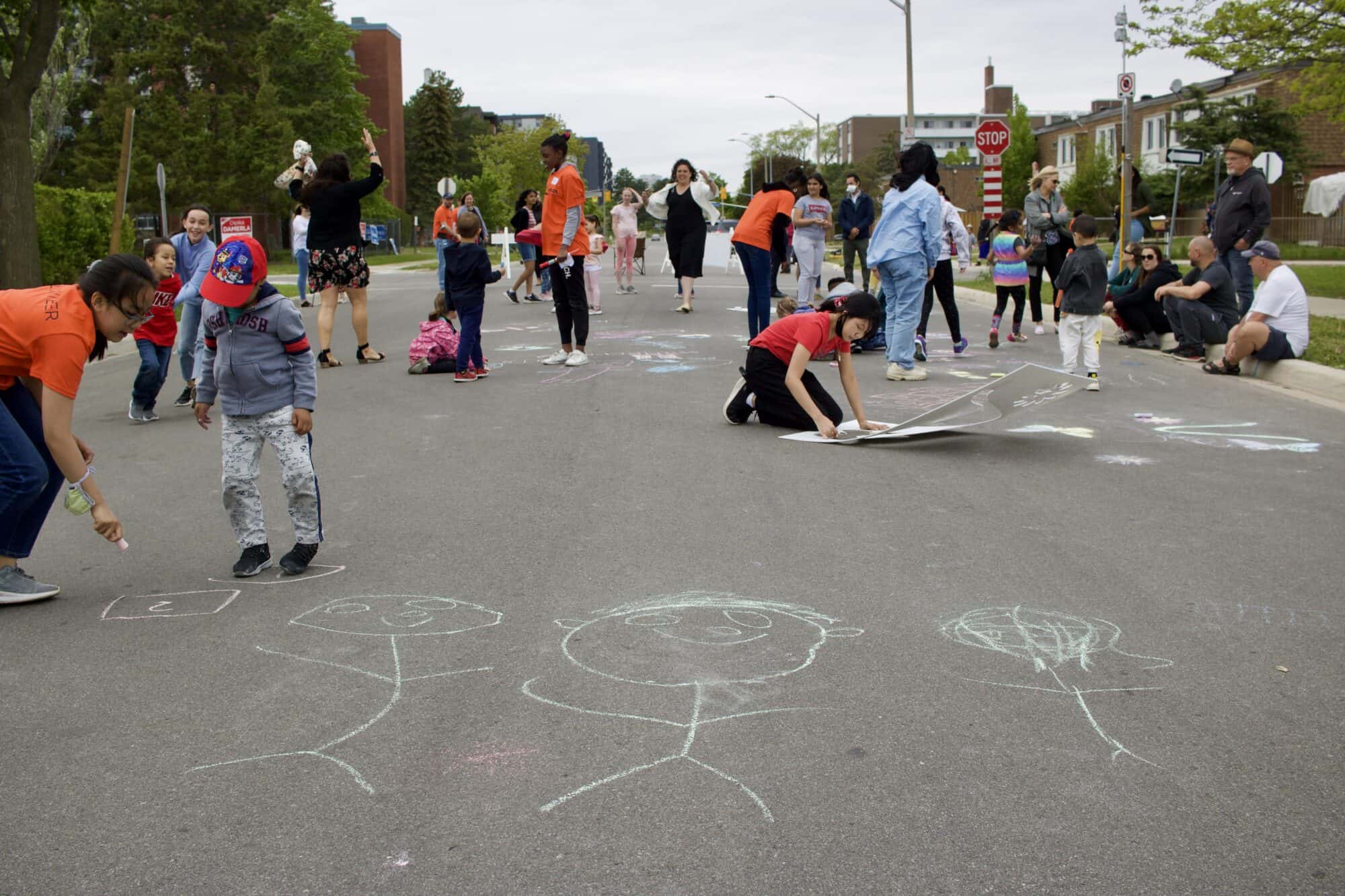
The National Active School Streets Initiative creates car-free zones in front of schools at the start and end of the school day. This program is a collaboration between non-profit organizations, research institutions, and community groups accelerating a nationwide movement for safer, happier, and healthier streets.

School Streets have many benefits:
- Increase rates of physical activity.
- Create safer school zones for children and youth.
- Improve air quality on or near the school site.
- Encourage independent mobility.
- Foster opportunities for community connections.
- Reduce vehicle congestion.
About the Program
The School Streets program is funded by the Public Health Agency of Canada’s Healthy Canadians and Communities Fund. The program runs from 2024 to 2027, with up to 30 School Streets planned across six provinces – British Columbia, Alberta, Manitoba, Ontario, Quebec, and New Brunswick.
School Streets is coordinated by Green Communities Canada, led by technical project experts at 8-80 Cities and Centre d’écologie urbaine, and is evaluated by research personnel at the Université de Montréal, University of British Columbia, Queen’s University, and Toronto Metropolitan University.
The Government of British Columbia’s Ministry of Transportation and Infrastructure also funds the program’s expansion in British Columbia (BC), with participation in up to 10 communities. The BC portion of the program is coordinated by Green Communities Canada and led by the Society for Children and Youth of BC.
Local partner organizations from each community participate in a Training Program and ongoing knowledge exchange opportunities through a Community of Practice. These activities enable the partner organizations, made up of not-for-profit organizations, municipalities, and school boards, districts and consortia, to lead the implementation of School Streets within their communities and to generate nationwide momentum.
Our research partners are also conducting an in-depth evaluation of many of these interventions. The research team collects data on various parameters, including population characteristics, children’s physical activity engagement, and participant satisfaction and engagement.
Access Program Resources
Explore our program resources to access the School Streets toolkit, previous School Streets reports, and more.
History of School Streets
School Streets originated in Bolzano, Italy during the early 1990s when communities noticed significant car traffic and congestion in front of their schools during pick-up and drop-off times. As a proposed solution, the first School Street was created. Since its inception, School Streets have expanded to many cities across Europe and North America. In 2019, Canada implemented its first School Street project in Toronto.
In 2021, School Streets pilot projects were being implemented in various communities across Canada. Green Communities Canada and 8 80 Cities partnered to lead the Ontario School Streets Pilot (OSSP) program, in which five School Streets were completed across four Ontario cities – Hamilton, Mississauga, Kingston, and Markham. In the same year, the Centre d’écologie urbaine, Université de Montréal, and Queen’s University co-led the Levelling the Playing Field program, in which they implemented School Streets in Montréal and supported the delivery of the Kingston School Street. The City of Vancouver has also organized School Streets since 2021, having led interventions in eleven schools across Vancouver. This National Active School Street initiative builds upon the findings, successes and momentum of these previous projects and spearheads the delivery of additional projects nationwide.
We’re taking the School Streets movement nationwide
School Streets News
Explore our various blogs to learn more about School Streets!
Response to 2025 Federal Budget

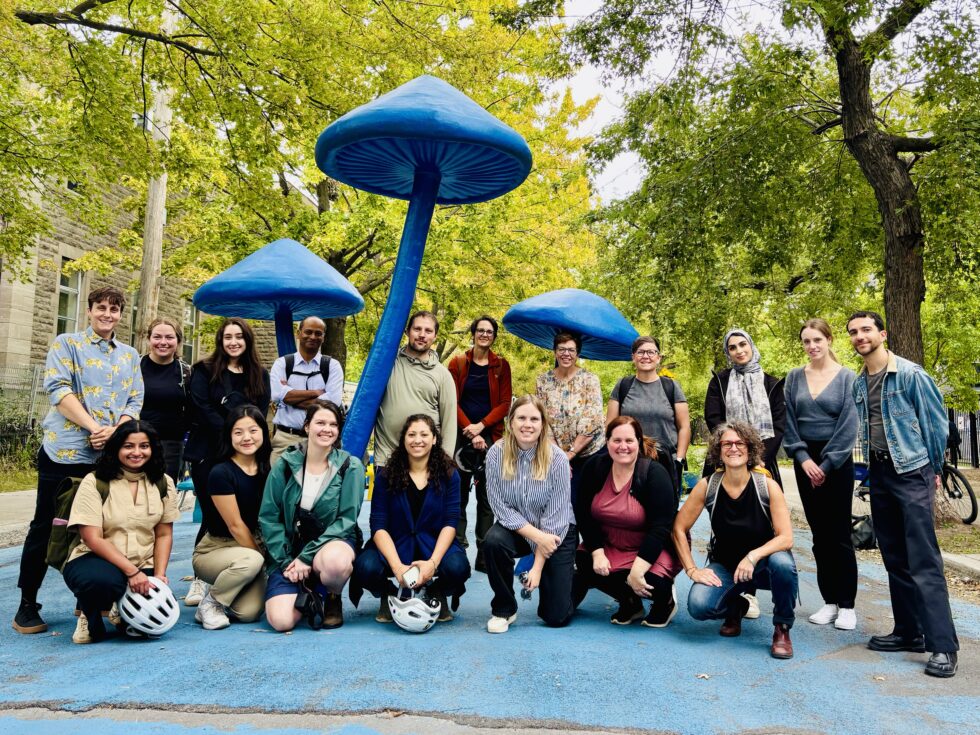
School Streets Team Gathers in Person for the First Time!

Press Release: Two Million Students Ride the Bus to School – Who Gets Left Behind in the Electric Transition?
Stay in the Know
If you would like to learn more about the program, please sign-up for our email updates!